
There’s a very specific kind of stiffness that shows up around late February.
It isn’t the dramatic kind that follows a big workout or an obvious injury. It’s quieter than that. It’s the kind where your hips feel suspicious of everything, your lower back hums with low-grade annoyance by the end of the day, and getting off the couch requires a small mental pep talk. You don’t remember doing anything extreme. You just feel heavier. Less fluid. A little disconnected.
And somewhere in that quiet discomfort, the thought creeps in:
Maybe this is just aging.
I love you. But no.
Winter changes how we live inside our bodies. We sit more. We drive more. We fold inward more. We brace against the cold, against busy schedules, against stress. We breathe a little smaller without realizing it. We hold our stomachs in while answering emails. We tighten while driving. We hunch slightly over our phones and call it neutral posture.
None of this is dramatic. But it is consistent.
And the body adapts to consistency.
If you ask your system to be compact and lightly clenched for three months straight, it gets very efficient at being compact and lightly clenched. That isn’t weakness. It’s intelligence. The problem isn’t that your body adapted. The problem is that you haven’t given it a new set of instructions yet.
Your body didn’t betray you. It adapted to the season you were in.
Tight Doesn’t Always Mean Short
When something feels tight, the immediate instinct is to stretch it. Pull longer. Go deeper. Twist harder. We’ve been taught that tension equals short muscles and that short muscles need force.
But what if your lower back isn’t short?
What if it’s tired?
What if it’s been busy keeping you stable all winter because your abs haven’t been coordinating well, your breath has been shallow, and your ribs and pelvis haven’t been stacked in a way that distributes load evenly?
When alignment is off and breath is restricted, certain muscles, especially your back, overworks to keep you upright. You don’t even know it’s happening. Overworking muscles often feel tight. Not because they’re short, but because they’re doing more than their share.
Stretching a tired muscle without changing the underlying demand is like telling the most responsible person in the group to “just relax” while still giving them all the tasks. They don’t need punishment. They need support.
Disconnection Feels Like Aging
Here’s where it gets subtle.
After months of reduced movement and increased bracing, your body can start to feel less responsive. Less predictable. You might notice balance feels slightly shakier. Getting down to the floor feels more complicated than it used to. Sneezing requires strategy.
That experience can feel like decline.
But most of the time, it’s not decline. It’s disconnection.
You’re not weak. You’re just not communicating well with your system right now.
Before we fix anything, we reconnect.
That’s the entire premise behind the 10-minute reset practice embedded below. It isn’t a workout. It isn’t meant to exhaust you. It’s meant to reorganize you. Alignment first. Breath second. Gentle coordination layered in slowly.
Even a small shift in how you sit and breathe can change how pressure moves through your body. And when pressure moves well, tension often decreases without forcing range.
Breath Is Not Fluff
If you’ve been lightly sucking in your stomach since 2007, you’re not alone. Many women have been taught that “core engagement” means holding everything tight all day. The problem is that constant gripping limits the diaphragm’s ability to move well. When the diaphragm doesn’t move well, you don't breathe efficiently and pressure doesn’t distribute well. And when pressure doesn’t distribute well, other muscles step in to help.
Often, that means your lower back and pelvic floor carry more load than they need to.
Breath is not relaxation fluff. It’s mechanics. It’s stability. It’s coordination. It’s the foundation that makes strength actually functional.
When you give your body permission to expand into the sides and back of the ribcage, when you stack your ribs over your pelvis instead of flaring or tucking dramatically, when you exhale before you move instead of holding your breath and hoping for the best, things start to feel different.
Not dramatic. Just different.
And that difference is the beginning of trust.
A Reset Is Not a Step Back
There’s a belief that if we’re not pushing hard, we’re regressing. That if something is gentle, it must be insufficient.
But a reset is not a step back. It’s recalibrating.
It’s you telling your body, “We’re safe. We’re organized. We can move again.”
If you try the 10-minute reset and feel even 5% better, that’s not small. That’s information. That’s your system responding to clarity.
And clarity is what builds confidence.
If You Want to Go Deeper
One reset feels good. Consistency feels transformative.
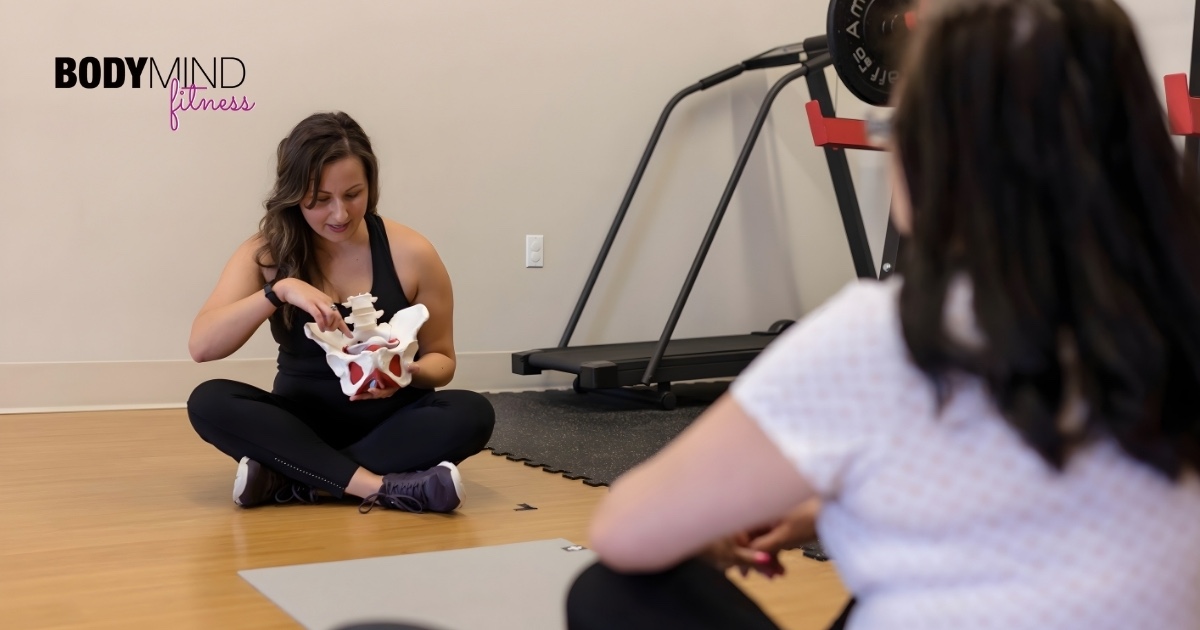
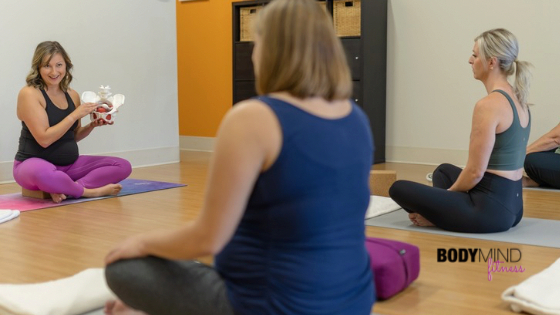
Inside my small group classes, in studio in Lambeth and online from your living room in your pajamas, we build on this exact foundation. We layer strength on top of alignment. We coordinate breath with movement. We reduce unnecessary tension instead of fighting it.
No extreme poses. No pretending you know what you’re doing. No performing flexibility for the room.
Just direction.
If your body has felt stiff or disconnected lately, you’re not behind. You’re not broken. You’re not too late.
You adapted.
Now you get to adapt again.
Start with the breath. Start with the reset. Start with five percent better.
That’s where everything else builds.