
There’s a very specific moment that almost no one talks about out loud.
You’re in the grocery store, halfway down the cereal aisle, and you feel a cough building. Or maybe you’re in your driveway, the cold air hits your lungs, and you know a sneeze is coming. It happens quickly, almost automatically, the tiny mental math that takes place before the cough or sneeze even arrives.
Cross your legs. Brace. Hope for the best.
It’s subtle. Efficient. You recover. No one notices. Life moves on.
But later, when you’re alone, there’s a small voice that says, Well… I guess this is just aging.
And that’s the part I want to gently interrupt.
Because leaking is common. It really is. But common and inevitable are not the same thing. And most of the time, it has very little to do with your body “wearing out.”
More often than not, it has to do with pressure.
Most of us were never taught how pressure actually moves through the body. Instead, we were taught a different strategy entirely. Tighten your stomach. Brace your abs. Pull everything inward and hold it there. Walk through life like someone might punch you in the stomach at any moment.
Many women have been doing exactly that for years. Sometimes decades.
It feels responsible. It feels disciplined. It feels like you’re doing the right thing for your core.
But constant gripping isn’t strength. It’s tension without coordination.
Imagine carrying groceries with your shoulders shrugged all the way up toward your ears. You could do it for a while, especially if you were determined. But eventually your neck would start to protest. Not because it’s weak, but because it’s doing far more work than it was designed to do.
Your pelvic floor works in a similar way.
It isn’t meant to clamp down endlessly. It’s part of a system designed to respond and adapt. It works alongside your breath and your deep abdominal muscles to manage pressure every time you lift something, cough, laugh, or move quickly.
When that system is coordinating well, pressure distributes through the body efficiently. When it isn’t, pressure often moves downward.
And that’s when symptoms begin to show up.
It can feel like decline. Like something is slipping or fading. Like your body has quietly crossed into a new chapter without asking your permission.
But most of the time, nothing is broken.
The system is simply disorganized.
One way to picture it is a trampoline. When pressure lands evenly in the center, the surface responds and rebounds smoothly. But when pressure lands off to one side again and again, the material starts to strain. Over time that uneven load creates wear.
Your core system behaves in a surprisingly similar way.
Alignment matters because it helps direct pressure where it needs to go. Breath matters because it creates space in the ribcage and abdomen. Your deep core muscles matter because they coordinate that pressure dynamically instead of locking everything down.
When we skip straight to “squeeze harder,” we often miss that bigger picture.
That’s why so many women tell me they’ve tried kegels and nothing changed. They weren’t wrong for trying. They simply weren’t given the full context.
And context changes everything.
The real shift isn’t cosmetic. It isn’t about carving visible abs or performing endless repetitions of exercises you hope are working.
It’s the moment when you suddenly think, Oh… that’s what’s happening.
That understanding softens the panic. It replaces embarrassment with curiosity. It turns sneezing from a small crisis into a manageable moment.
And here’s the part I love most.
When your body feels understood, it feels safer.
When it feels safer, it responds differently.
You move more freely. You laugh without bracing first. You stop scanning for the nearest bathroom every time you push a cart through the grocery store. The tension that once felt inevitable begins to soften.
It becomes doable.
Not because you forced it.
Because you practiced differently.
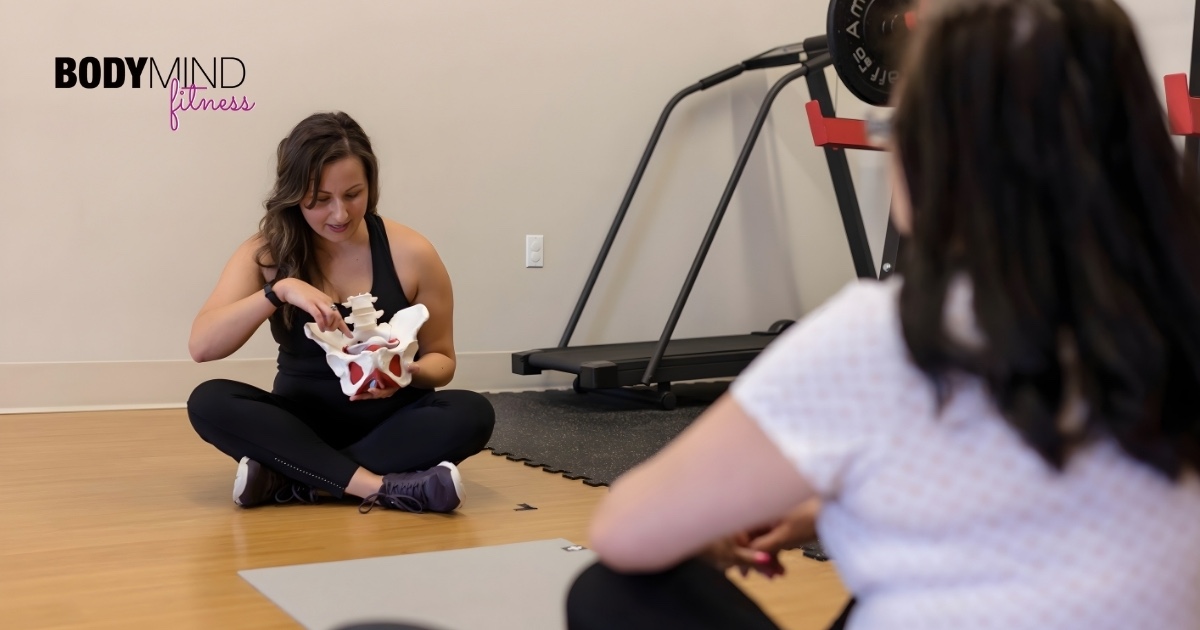
If any of this feels familiar, I break down the full system in the video below. It isn’t dramatic or complicated. It’s simply a clear explanation of what’s actually happening inside the body and how alignment, breath, and deep core coordination work together.
If you’ve been trying your best to manage symptoms and assuming this is simply the next stage of life, I want you to know something important.
You are not behind.
You are not broken.
You were simply never taught this way.
And learning is allowed at any stage.
Working on pelvic health doesn’t require you to overhaul your life. It doesn’t require punishing workouts or pretending you understand anatomy textbooks. Most of the time it begins with awareness, small adjustments, and repetition done well.
It requires practice.
And practice, even at 30, 40, 50, or beyond, still works.
You don’t need to whisper about these things or treat them as something embarrassing. They are integral to how you move through your day, and they deserve attention without shame.
When you understand the system, confidence follows.
Not because you’re perfect.
Because you’re informed.
And informed is powerful.