If you’ve ever wondered whether yoga just doesn’t “work” for you anymore, you’re not alone.
Not because you suddenly dislike yoga. Not because you’ve lost discipline or fallen off some invisible wagon. But because your life changed. The way you move through your day changed. The way your body carries stress changed. And somewhere along the way, the practice that once felt grounding started to feel like something that required more energy than you had to give.
You sit more than you used to. You answer messages while standing in the kitchen. You fall asleep with your phone still in your hand. You wake up already thinking about what needs to get done. And then roll out a mat and expect your body to respond like it did ten years ago.
So it’s worth asking the real question.
Is modern yoga failing modern bodies? Or are we just afraid to let it evolve?
Prefer to watch instead?
I share more of my personal experience with this tension, and how it changed the way I teach, in this week’s video:
If you’d rather keep reading, let’s go a little deeper.
When people talk about “traditional yoga,” they’re often referring to the postural practice we see in studios today. But modern asana, especially the flowing, strength-based formats many of us know, is relatively young in the long history of yoga. In the same stretch of time that these formats became popular, daily life transformed completely.
We commute. We sit at desks. We scroll. We multitask constantly. We live in a low hum of background stress that never fully powers down. Our nervous systems are lit up more often than they are settled.
It would be strange if our movement practices didn’t respond to that reality.
And yet, there’s a quiet fear that if we adapt yoga, we’re somehow watering it down. If we add strength, it’s no longer “real.” If we shorten a class, it doesn’t count. If we use blocks or modify poses, we must not be capable enough.
Underneath that fear is care. A desire to protect something meaningful.
But the essence of yoga was never a specific sequence or aesthetic. It was breath. It was awareness. It was attention. It was the choice to notice what’s happening instead of overriding it.
Those things don’t disappear just because the shapes evolve.
As I often say, the bones are still yoga.
When someone tells me yoga doesn’t translate to real life anymore, I don’t hear resistance. I hear honesty. I hear someone whose body is asking for support that matches the life they’re actually living.
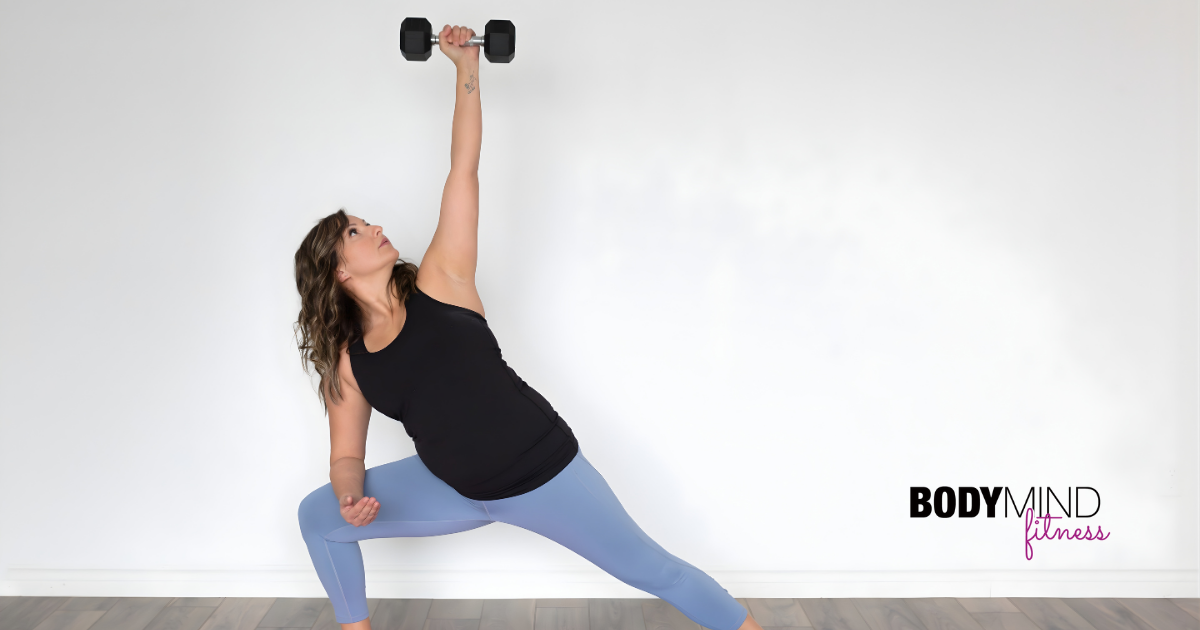
Modern bodies carry groceries up stairs, hold children on one hip while answering emails, sit for hours and then expect their hips and shoulders to cooperate. Strength and mobility aren’t separate identities in real life. They’re intertwined. Blending strength into yoga isn’t about making it more aggressive. It’s about making it more relevant.
Sometimes when yoga stops fitting, people assume they’re the problem. Not flexible enough. Not consistent enough. Not disciplined enough.
But sometimes the issue isn’t discipline. It’s rigidity.
We protect the format instead of protecting the person practicing it.
And when something finally meets us where we are, instead of where we think we “should” be, we come back.
Practices that survive across generations evolve. Language evolves. Education evolves. The way we work evolves. Movement should evolve too.
Adaptation isn’t dilution. It’s responsiveness. It’s paying attention to the bodies in front of us instead of preserving a snapshot in time.
So if yoga stopped fitting your life, it might be worth asking yourself a different question.
Was it the practice that failed you? Or was it the format that stopped matching your capacity?
Did you lose interest? Or did you simply lose energy?
Sometimes the most sustainable shift isn’t quitting. It’s adjusting.
And if the choice is gentle movement or no movement at all, gentle movement still counts.
If this conversation resonates, you can explore how this philosophy shows up in my classes. You don’t have to decide anything today. Curiosity is enough. I have two ways for you to join us, in my London, Ontario studio or online from anywhere in the world, book you spot today, and if you've never been to the studio, you can try your first class for $10 using code FIRSTCLASS10.
Belonging isn’t built by being perfect.
It’s built by beginning.