There’s a moment that happens in yoga classes more often than people realize.
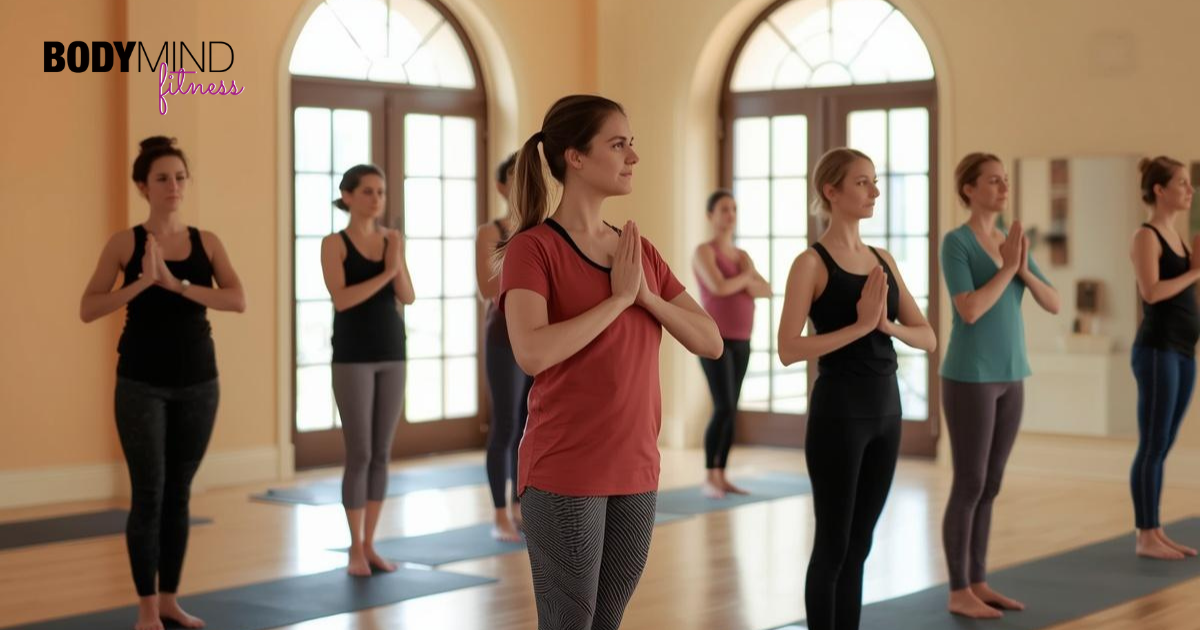
You walk into the room, unroll your mat, glance around, and suddenly become hyper aware that everyone else seems to know exactly what they’re doing. The teacher moves gracefully from one pose to the next, the people around you follow along without hesitation, and you find yourself doing that thing where you keep one eye on the instructor and the other on the person beside you, trying to piece together what your body is supposed to be doing.
If you’ve ever had that moment, you’re not alone.
In fact, many people assume that moment means they’re “bad at yoga.” They think flexibility must be the missing ingredient, or maybe strength, or coordination, or whatever mysterious skill everyone else in the room seems to possess. What most people don’t realize is that the problem often isn’t their body at all. It’s the simple fact that many classes are taught as though everyone in the room moves the same way.
And of course, bodies don’t work like that.
Some people arrive on their mats after sitting at a desk for eight hours. Some have shoulders that remember decades of tennis or swimming. Some are navigating old injuries, back pain, pelvic floor symptoms, or the kind of stiffness that sneaks in when life gets busy and movement slowly slides down the priority list. When a class assumes everyone should move the same way, a lot of people end up doing their best impression of the teacher rather than actually understanding what their own body is doing.
That’s where things start to feel confusing.
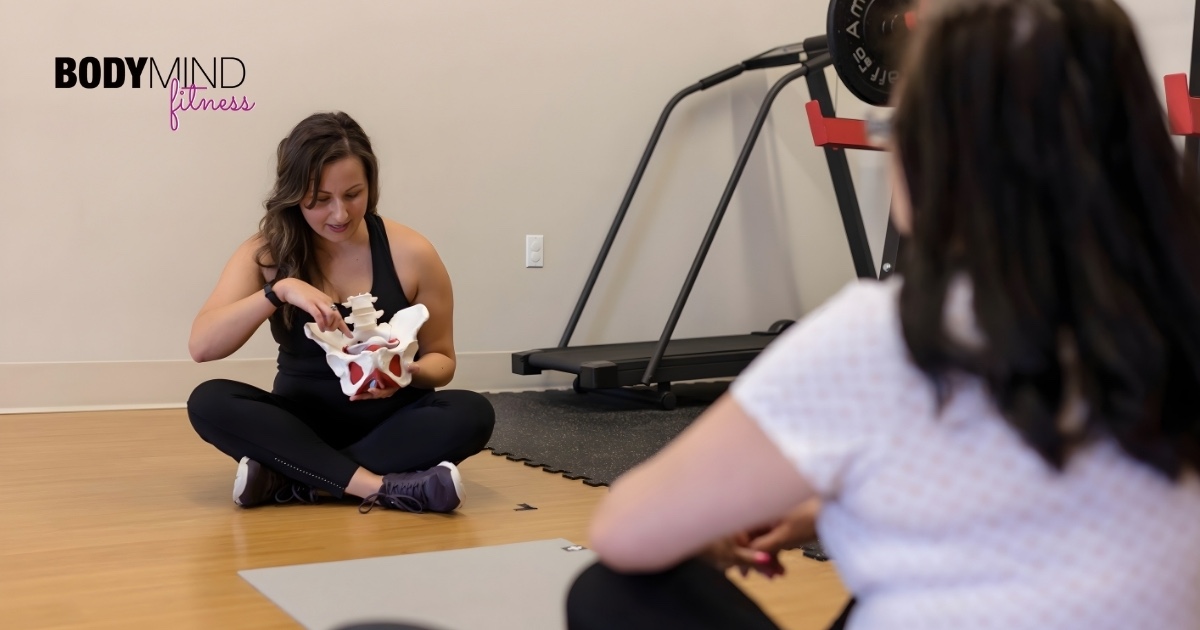
One of my students summed this up perfectly after class this week. Everyone else had rolled up their mats and slipped their shoes back on, and she came over while I was putting away some weights. She told me she really liked how I explain exercises during class, especially when we’re doing strength work and I describe where people should be feeling it.
Then she laughed and said, “In other classes I’ve taken, I mostly found myself just trying to copy the teacher and hoping I was doing it right.”
It’s such an honest description of what many people experience.
When we’re simply imitating movement, we’re often guessing.
- Guessing whether we’re using the right muscles
- Guessing whether the exercise is helping or aggravating something
- Guessing whether we should push through or back off
- And guessing isn’t a particularly comfortable way to build confidence in your body.
Personalization changes that completely.
It doesn’t mean every person in the room needs an entirely different class. It simply means the movement is explained and adjusted so your body can understand it. Sometimes that’s as simple as changing the position of your feet or slowing the tempo of an exercise. Sometimes it means choosing a different weight or range of motion so the intended muscles can actually do their job.
These adjustments might look small from the outside, but inside the body they can make a remarkable difference. Instead of feeling like you’re muscling your way through an exercise, you begin to notice something more interesting happening. The right muscles begin to engage. Your breathing becomes easier. The movement feels more stable, more controlled, and often surprisingly more comfortable.
One of my favourite moments as a teacher is when someone pauses halfway through an exercise and says, with a mixture of surprise and relief, “Oh… wait. I think I feel it now.”
That moment is quietly revolutionary.
Not because the exercise suddenly became impressive, but because the body finally understands what it’s trying to do. Once that understanding shows up, movement stops feeling like something you might be doing wrong. It starts to feel like something you can explore. And when movement feels approachable rather than intimidating, something else begins to happen as well.
People come back.
Consistency becomes easier. Small improvements begin to show up. The body adapts, strength builds gradually, and confidence grows right alongside it.
That’s the real magic of personalized movement.
If you’d like to see a deeper breakdown of why personalization makes such a difference, I’ve put together a short video that walks through five of the biggest reasons personalized yoga tends to work so well.
One of the most rewarding parts of teaching is watching people realize that movement doesn’t require a perfect body, a perfect pose, or even perfect coordination. What it usually requires is a little guidance, a little curiosity, and the willingness to learn how your own body works.
And once that understanding begins to grow, progress tends to follow in ways that feel far more supportive than stressful.
That understanding starts with my 12-week Personalized Small Group Yoga Series, made for beginners or anyone who's been a little nervous walking into a yoga class. These classes are tailor-created knowing you're going to be there, with options just for you.